In a bold move that blended vintage aesthetics with contemporary rebellion, the self-proclaimed 'Satanic doo-wop' duo Twin Temple recently graced the stage of Comedy Central's 'The Daily Show.' This high-profile appearance not only showcased their unique musical blend but also marked a significant moment for a band that has consistently challenged conventional boundaries. Their performance comes on the heels of a contentious departure from a country music tour and precedes a highly anticipated stint opening for rock icon Jack White, solidifying their position as compelling, if controversial, figures in today’s music landscape. Their journey highlights the ongoing interplay between artistic expression, societal norms, and the ever-evolving definition of mainstream acceptability.
The Resurgence of Occult Rock: Twin Temple's Distinctive Sound
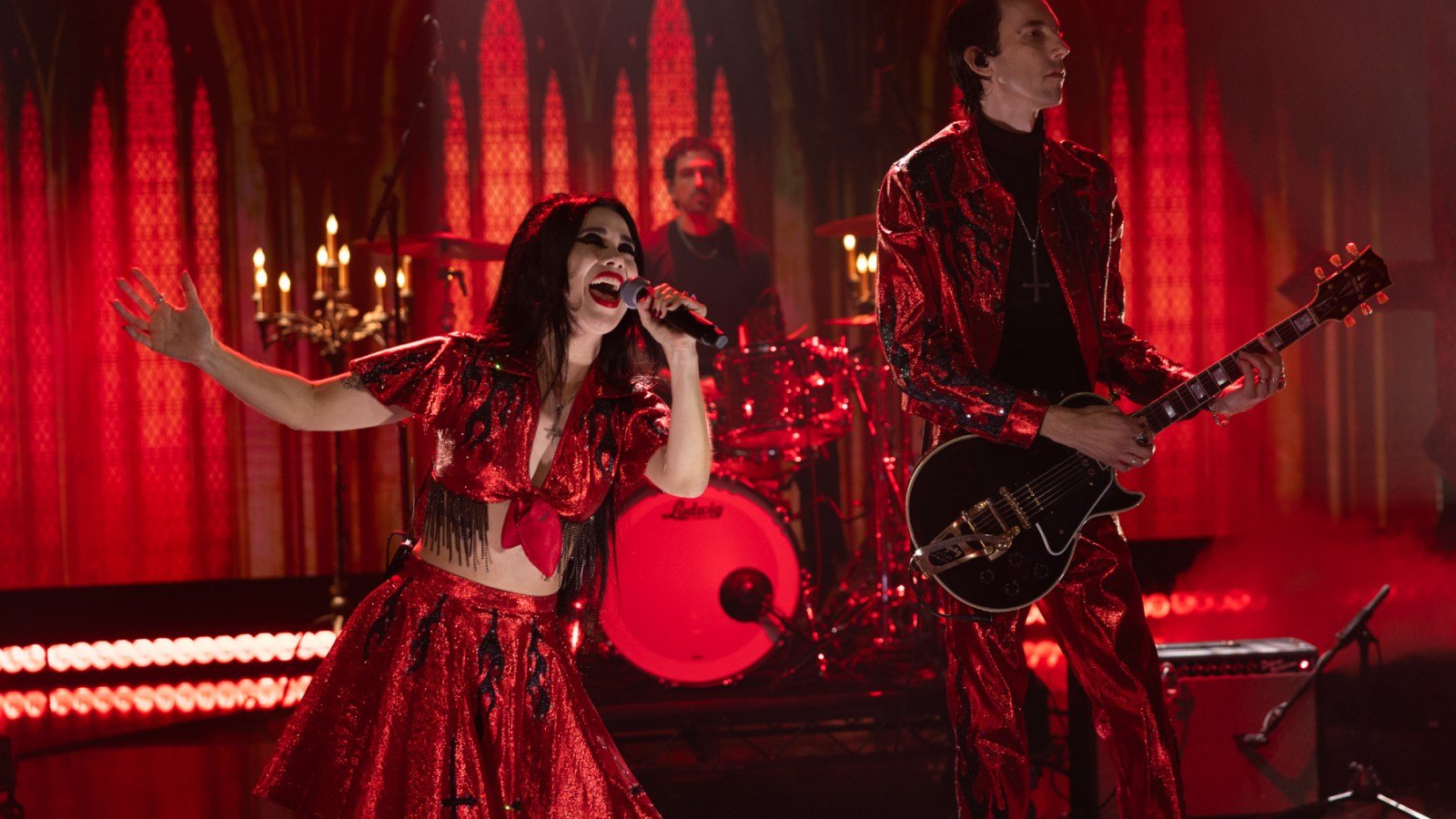
Twin Temple, comprised of Alexandra and Zachary James, have carved out a distinctive niche with their self-styled 'Satanic doo-wop' genre. Their music is an intoxicating fusion of 1950s and 60s pop sensibilities, marked by lush harmonies, crooning vocals, and classic rock and roll instrumentation, all interwoven with overtly occult and Satanic lyrical themes. This juxtaposition creates a sound that is both nostalgic and avant-garde, immediately captivating listeners while simultaneously provoking thought. Their aesthetic is equally deliberate, featuring vintage costuming, stylized rituals, and a theatricality that transforms each performance into a meticulously crafted invocation rather than merely a concert. Beyond the visual spectacle, the band champions a philosophy rooted in liberation, self-empowerment, and a rejection of traditional dogma, often described as 'Satanic feminism,' which positions their 'love for Satan' as a metaphor for personal freedom and defiance against oppressive systems.
Their sound resonates with listeners who appreciate both the melodic charm of bygone eras and the intellectual challenge of unconventional themes. By adopting the imagery and tenets of LaVeyan Satanism – which emphasizes individualism, hedonism, and rational self-interest rather than the worship of a literal devil – Twin Temple recontextualize 'Satanic' elements from fear-mongering tropes into symbols of autonomy and self-discovery. This approach distinguishes them from many other bands that employ dark imagery, offering a philosophical depth beneath the surface glamour. Their commitment to this intricate persona ensures that their artistry is not only heard but also deeply experienced, inviting audiences to look beyond superficial interpretations.
From Controversy to Mainstream: The Daily Show Appearance
Twin Temple's recent appearance on 'The Daily Show' was a pivotal moment, showcasing their distinctive blend of sound and spectacle to a vast, mainstream audience. Performing their track "Haunt Me," the duo delivered a spellbinding rendition that was both musically tight and visually captivating. Alexandra James, with her commanding stage presence and soaring vocals, along with Zachary James on guitar, mesmerized viewers, effectively translating their unique live show energy to a national television platform. This appearance wasn't just a performance; it was a cultural statement, proving that their esoteric brand of entertainment could transcend niche audiences and command attention on one of late-night television's most respected programs.
The significance of 'The Daily Show' platform cannot be overstated. Known for its satirical news coverage and broad appeal, the show rarely features acts as overtly thematic as Twin Temple. Their inclusion represents a tacit acknowledgment of the band's growing cultural relevance and the increasing openness of mainstream media to diverse and boundary-pushing artistic expressions. For a band previously relegated to underground scenes or facing outright rejection, this opportunity offered unprecedented exposure, potentially reshaping public perception and challenging preconceived notions about what constitutes 'acceptable' musical content in American homes.
"Haunt Me": A Thematic Exploration
The song "Haunt Me" itself is a quintessential Twin Temple offering, expertly weaving romantic longing with their signature occult overtones. Its lyrics evoke a sense of yearning, not just for a lover, but for a profound, almost spiritual connection that transcends the mundane. The track's vintage melody and Alexandra James’s emotive delivery create an atmosphere of sultry melancholy, perfectly encapsulating the band's ability to imbue classic pop structures with a dark, sophisticated edge. "Haunt Me" serves as an excellent entry point for new listeners, demonstrating their musical prowess while subtly introducing their thematic depth, hinting at the deeper philosophical currents running through their entire body of work without being overtly confrontational.
The Nashville Fallout: Bounced from a Country Tour
The 'Daily Show' triumph is made all the more notable when contrasted with a prior incident that saw Twin Temple unceremoniously removed from a country music tour. While the specific tour details are sometimes underplayed, reports confirmed that their distinct brand of 'Satanic doo-wop,' complete with ritualistic stage antics and overt occult imagery, proved too provocative for the sensibilities of a country music audience and, perhaps more critically, the conservative leanings of tour organizers and some venues. This episode underscored the persistent cultural friction between traditional values, often prominent in country music demographics, and the challenging artistic expressions that Twin Temple embodies. The incident harked back to historical 'Satanic Panic' anxieties, revealing that despite shifts in popular culture, deeply ingrained fears and moral judgments surrounding occult imagery remain potent, especially when encountered in unexpected contexts.
The decision to remove them from the tour, reportedly that of the headlining act or the tour management, highlighted the cultural chasm their music attempts to bridge. While Twin Temple's use of Satanic themes is largely philosophical and artistic, rather than literal, the imagery itself can be jarring for those unaccustomed to such theatricality within their preferred musical genres. This rejection from a mainstream touring circuit, however, arguably galvanized their fanbase and amplified their message, positioning them as defiant outsiders in a music industry often driven by safe, marketable images. It also provided a stark lesson in the enduring power of cultural gatekeepers within specific musical communities.
A New Alliance: Opening for Jack White
In a testament to their resilience and unique appeal, Twin Temple's trajectory quickly shifted from rejection on one tour to a coveted spot opening for the legendary Jack White. This opportunity represents a significant endorsement from one of rock's most influential figures, known for his eclectic tastes and his penchant for championing original and often unconventional artists through his Third Man Records label. White's decision to include Twin Temple on his tour validates their artistic vision and provides them with access to an audience that is generally more open to experimental and boundary-pushing music. This alliance contrasts sharply with their earlier setback, illustrating how genuine artistic merit, even if controversial, can find powerful advocates in the music world.
The partnership with Jack White is more than just a touring slot; it’s a cultural bridge. White's own career has been defined by a deep reverence for musical history, combined with a relentless drive for innovation and a keen eye for authenticity. By bringing Twin Temple into his orbit, he not only offers them a massive platform but also signals to his fanbase that their art is worthy of attention and respect. This collaboration speaks volumes about the shifting landscape of music, where artists who defy easy categorization can find their rightful place among industry titans, proving that authenticity and a strong artistic vision can ultimately overcome initial cultural resistance.
The Broader Cultural Conversation: Satanism in Music
Twin Temple’s ascent prompts a broader discussion about the role of 'Satanic' and occult imagery in music, a practice with a long and storied history. From the early blues artists who sang of dealings with the devil at the crossroads to the groundbreaking shock rock of Alice Cooper and the foundational heavy metal of Black Sabbath, musical artists have long utilized these themes to explore rebellion, existentialism, and critique societal norms. However, Twin Temple approaches this tradition with a unique philosophical bent. Their 'Satanism' is not merely for shock value or aesthetic edginess; it is deeply intertwined with their messaging of personal autonomy, freedom of thought, and a rejection of oppressive religious dogma. They articulate a worldview where 'Satan' represents individualism and enlightenment, rather than literal evil, drawing heavily from the tenets of LaVeyan Satanism.
This nuanced philosophical stance sets them apart from many of their predecessors. While classic bands used such imagery to provoke and entertain, Twin Temple employs it as a coherent ideological framework, delivering a consistent message of empowerment, particularly for women, within a meticulously crafted artistic universe. Their work encourages listeners to question authority, embrace their true selves, and challenge conventional morality, all wrapped in the accessible and often romantic sounds of mid-century pop. This thoughtful integration of philosophy and music ensures that Twin Temple contributes significantly to the ongoing conversation about freedom of expression and the diverse ways artists can challenge societal boundaries, proving that rebellion can indeed be both stylish and profoundly meaningful.
Twin Temple's journey from niche genre creators to mainstream television performers and openers for a rock legend is a compelling narrative of artistic persistence and cultural evolution. Navigating controversy with unwavering authenticity, they have solidified their place as vital voices in contemporary music, proving that unconventional art can indeed find its audience and its advocates. Their story is a powerful reminder of how music can challenge, entertain, and inspire, prompting us to look beyond the surface. For more in-depth analyses of groundbreaking artists and cultural phenomena, continue exploring the rich content available right here on NAME OF SITE.
Fonte: https://www.rollingstone.com