The concept of parallel universes and alternate realities has profoundly reshaped popular culture, offering boundless opportunities for storytelling. While many contemporary franchises now explore the multiverse, Star Trek pioneered the idea decades ago. A critical distinction emerged 17 years ago with J.J. Abrams' 2009 reboot, which introduced a unique interpretation of its multiverse, setting it distinctly apart from the sprawling, interconnected network now envisioned by the Marvel Cinematic Universe.
Star Trek's Original Multiverse: The Mirror Universe
Star Trek's initial foray into alternate realities was the iconic Mirror Universe, first seen in 'Mirror, Mirror' from Star Trek: The Original Series. This was not a divergent timeline but a concurrently existing parallel dimension, a dystopian reflection where the benevolent Federation was replaced by the tyrannical Terran Empire. Beloved characters appeared as ruthless counterparts, their moral compasses inverted. This concept served as a powerful narrative tool for ethical exploration, examining themes of human nature, morality, and the corrupting influence of power. Its recurring presence across series like Deep Space Nine and Discovery reinforced its role as a setting for character-driven moral dilemmas within a parallel world, rather than a source of large-scale temporal threats.
The Kelvin Timeline: A Strategic Branching of Reality
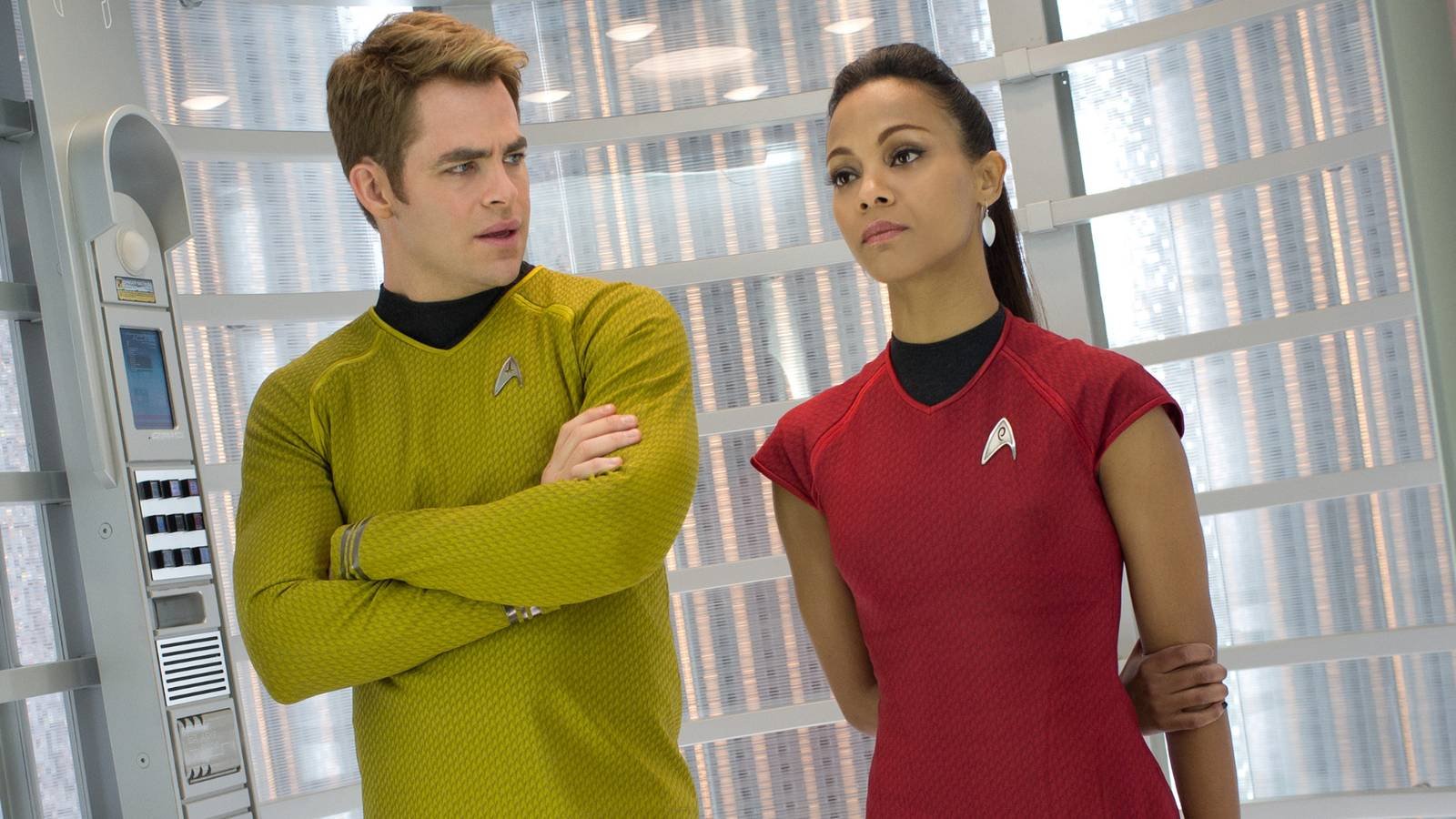
The 2009 film Star Trek introduced the Kelvin Timeline, a significant departure from previous multiversal concepts within the franchise. This new reality was not a pre-existing parallel dimension but a direct consequence of a temporal incursion. The Romulan mining vessel Narada traveled back in time, altering history, destroying the USS Kelvin, and fundamentally reshaping James T. Kirk's life. Crucially, the Kelvin Timeline did not erase the original Prime Timeline. Instead, it created a separate, distinct branch, acting as an ingenious narrative mechanism for rebooting the franchise. This allowed for fresh adventures with familiar characters in new circumstances, offering a creative slate without discarding decades of established lore, essentially defining a unique form of temporal divergence for Star Trek.
Marvel's Multiverse: Cosmic Threats and Interconnected Realities
In stark contrast, the Marvel Cinematic Universe (MCU) has developed a distinct and increasingly complex portrayal of the multiverse. Central to Marvel's approach, particularly highlighted in series like Loki and films such as Doctor Strange in the Multiverse of Madness, is the concept of a 'Sacred Timeline' governed by the Time Variance Authority (TVA). Any significant deviation, or 'Nexus event,' from this path creates a new branch timeline. The MCU's multiverse frequently presents direct and catastrophic threats, most notably 'incursions' where two universes collide, risking mutual annihilation. This model emphasizes a fragile cosmic balance, where altering timelines or traversing realities carries dire, universe-ending consequences, elevating stakes to the preservation of existence itself rather than solely character-centric moral dilemmas.
Contrasting Philosophies: Identity vs. Existential Threat
The divergent multiversal frameworks of Star Trek and Marvel reflect fundamental differences in their narrative philosophies. Star Trek's Mirror Universe primarily serves as a vehicle for ethical and character exploration, contrasting moralities and examining the impact of different societies on identity. The Kelvin Timeline, while a timeline split, functioned more as a creative reboot, isolating its new continuity rather than posing an inherent threat to the Prime Universe. Its focus remained on the character journeys within that newly formed reality. Conversely, Marvel frequently employs its multiverse as a stage for epic, high-stakes conflicts, where the very fabric of reality is perpetually at risk. Branching timelines are sources of chaos, leading to incursions and existential threats that demand cosmic intervention. Star Trek explores 'what if' scenarios through a lens of identity and moral choice, while Marvel amplifies these into galaxy-spanning battles for survival, fundamentally differing in scale and consequence.
The Enduring Impact on Storytelling
Both Star Trek and Marvel have profoundly influenced modern storytelling, each contributing uniquely to the pervasive concept of the multiverse. Star Trek pioneered parallel worlds for introspective explorations of identity and societal structures, while its Kelvin Timeline offered a powerful method for franchise revitalization. Marvel, building on decades of comic book lore, has popularized a more volatile and interconnected multiverse in film and television, where consequences are dire and stakes are monumentally high. As popular culture continues to embrace the infinite possibilities of alternate realities, the distinct models presented by these two titans of speculative fiction will undoubtedly continue to inspire and evolve, illustrating diverse approaches to crafting compelling multiversal narratives.
Delve deeper into the intricate lore of Star Trek, Marvel, and countless other franchises by continuing to explore the extensive archives and insightful analyses available exclusively on NAME OF SITE. Uncover hidden connections, gain new perspectives, and stay informed on the latest developments in your favorite universes. Your next discovery awaits!
Fonte: https://screenrant.com