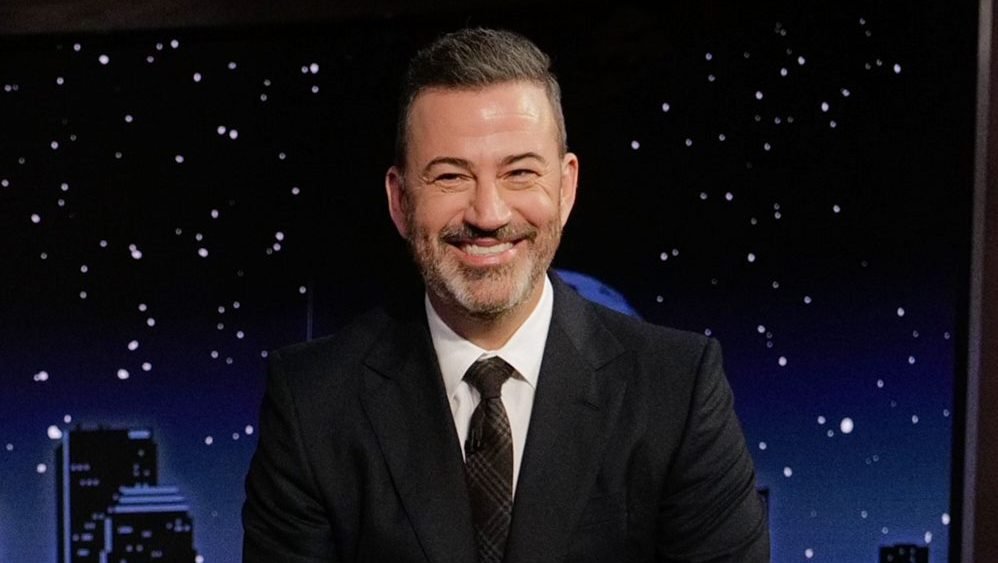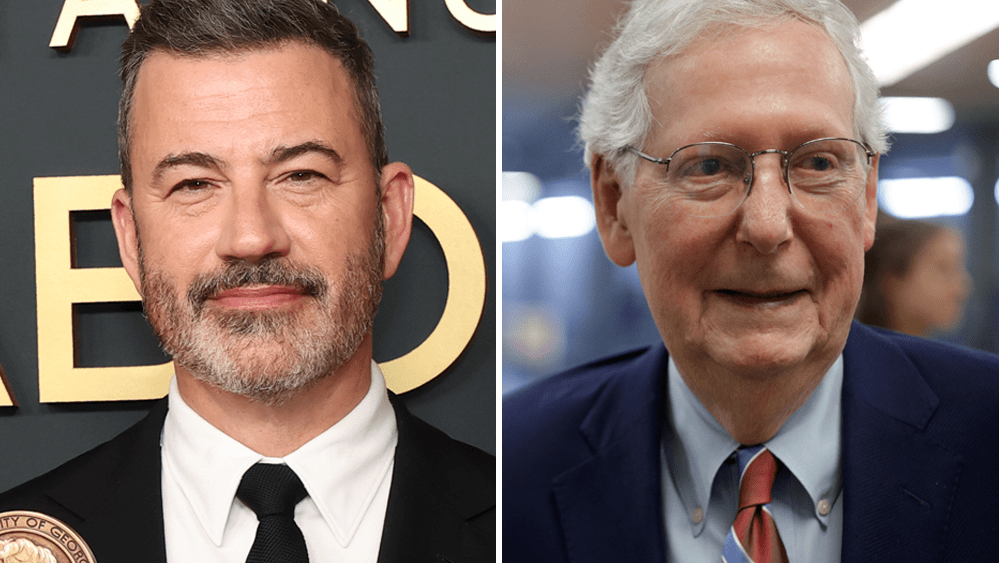
Even while on a customary summer hiatus from his acclaimed ABC late-night talk show, comedian Jimmy Kimmel has maintained his distinct voice in the American political landscape. Known for his incisive wit and often pointed critiques, Kimmel recently turned his comedic lens toward Senator Mitch McConnell. The Republican leader had proactively released a photograph on social media, intending to serve as a 'proof of life' amid escalating public and media inquiries regarding his health and continued fitness for office. This act, however, inadvertently provided fertile ground for Kimmel's satirical commentary, igniting a broader discussion about the intersection of political transparency, public health, and the role of humor in navigating sensitive national conversations.
The Unfolding Narrative of Senator McConnell's Health Concerns
The public's heightened scrutiny of Senator McConnell's health did not emerge in a vacuum. It followed a series of concerning incidents that drew widespread attention and fueled speculation. Most notably, the senior Kentucky senator experienced at least two widely publicized episodes during press conferences where he appeared to momentarily freeze, becoming unresponsive for several seconds before being escorted away or prompted by aides. These instances, captured on live television and subsequently viral across digital platforms, raised legitimate questions about his cognitive and physical well-being. As a prominent figure and the longest-serving Senate Majority Leader in history, McConnell's health carries significant implications for the legislative agenda, the Republican Party's strategy, and the overall stability of the Senate.
These public health scares prompted calls for greater transparency from both his constituents and political opponents. While his office initially downplayed the incidents, attributing them to lightheadedness or recovery from a concussion sustained earlier in the year, the recurring nature of the episodes continued to stoke concern. The pressure mounted, creating an environment where a simple photograph was perceived as a necessary measure to reassure a skeptical public. This situation underscores the unique challenges faced by high-profile public servants, where personal health can quickly become a matter of national interest and political discourse.
The 'Proof of Life' Photo: Intent Versus Perception
In an attempt to quell the rising tide of speculation, Senator McConnell's team strategically released a photograph depicting him seemingly robust and engaged. The term 'proof of life,' typically associated with hostage situations or missing persons, was deliberately or inadvertently evoked by the context surrounding the photo's release. The intent was clear: to project an image of vitality and continued capability, thereby affirming his capacity to fulfill the demanding responsibilities of his senatorial role. This move, however, rather than definitively silencing the rumors, instead created another talking point for both serious analysis and satirical critique. The very act of needing to provide 'proof of life' implicitly acknowledges the gravity of the public's concerns, making the visual evidence an object of scrutiny in itself.
The effectiveness of such a political maneuver often hinges on its reception by various audiences. For supporters, the photo might have offered a measure of reassurance, affirming their belief in his continued leadership. For critics and satirists like Jimmy Kimmel, it became an immediate target, highlighting the underlying absurdity or desperation perceived in the need for such a public demonstration. In the age of social media, where images can be quickly disseminated, interpreted, and recontextualized, the control over narrative becomes increasingly tenuous for political figures. The photograph, meant to be definitive, instead became another catalyst for dialogue, further emphasizing the precarious balance between a politician's private health and their public image.
Jimmy Kimmel's Role in Late-Night Political Satire
Jimmy Kimmel Live!, like many late-night programs, occupies a unique space in American media, blending entertainment with often pointed political commentary. Kimmel has carved out a reputation for himself as a host who is unafraid to tackle contentious political issues and directly challenge public figures, particularly those from the Republican party. His humor frequently relies on observational comedy, hyperbole, and a knack for identifying and exploiting perceived hypocrisies or absurdities in the political sphere. This approach allows him to resonate with a broad audience, many of whom look to late-night hosts not just for laughs, but also for a reflection of current events filtered through a comedic, yet often critical, lens.
The targeting of Senator McConnell’s 'proof of life' photo aligns perfectly with Kimmel’s established comedic style. By drawing attention to the unusual nature of the photo's release, Kimmel taps into a public sentiment that questions the sincerity or necessity of such a gesture. Late-night satire often serves as a barometer for public frustration or disbelief, providing an outlet for shared anxieties through humor. While some may view such jokes as disrespectful, proponents of political satire argue that it plays a vital role in democratic discourse, holding power accountable and prompting deeper consideration of issues that might otherwise be dismissed as mere political theater. Kimmel's commentary, even from a summer break, reinforces the idea that no politician, regardless of stature, is immune to the scrutinizing gaze of public opinion and the sharp wit of comedians.
Age, Fitness, and Public Service: A Broader National Debate
The public discourse surrounding Senator McConnell's health is not isolated; it is intrinsically linked to a larger, ongoing national conversation about the age and fitness of public servants in the United States. With an aging political leadership across all branches of government, questions about physical stamina, cognitive acuity, and the ability to withstand the immense pressures of high office are becoming increasingly pertinent. The U.S. Senate, in particular, has a significant number of members in their advanced years, leading to debates about term limits, mandatory retirement ages, or more stringent health disclosure requirements. This issue transcends partisan lines, affecting perceptions of leadership effectiveness and raising concerns about the future direction of the country.
This discussion is not merely about individual health but touches upon fundamental principles of governance and representation. Are the rigorous demands of legislative work, constant travel, and intense public scrutiny sustainable for individuals in their eighties or nineties? What mechanisms are in place, or should be in place, to ensure that leaders are fully capable of performing their duties without impediment? The transparency surrounding Senator McConnell's health, or lack thereof, inadvertently placed this broader societal question into sharp focus. As the nation grapples with complex domestic and international challenges, the capacity of its leadership remains a critical element for public confidence and effective governance. This episode serves as a powerful reminder that the personal well-being of public figures is often inextricably woven into the fabric of national well-being, prompting a necessary and continuing dialogue about the expectations and realities of age in positions of power.
The Interplay of Media, Politics, and Public Trust
The incident involving Senator McConnell's health and the subsequent 'proof of life' photo also illuminates the intricate interplay between media scrutiny, political strategy, and the erosion or reinforcement of public trust. In an era of rapid information dissemination and heightened political polarization, every public action by a prominent politician is magnified and dissected. Traditional news outlets engage in investigative journalism to uncover facts, while social media platforms become arenas for immediate public reaction, speculation, and often, misinformation. Political teams, in turn, must navigate this complex landscape, balancing the need for transparency with strategic messaging to protect a public figure's image and political standing.
The public's demand for transparency from its leaders is greater than ever, fueled by a desire for accountability and a growing skepticism towards official narratives. When health concerns arise, particularly for figures like Senator McConnell who hold immense power, the expectation for clear, unambiguous information intensifies. The 'proof of life' photo, rather than being a simple factual statement, became a symbol of this ongoing tension. It highlighted how politicians attempt to manage public perception, and how the media, including satirical programs, play a crucial role in challenging or endorsing those efforts. Ultimately, incidents like this underscore the constant negotiation between what politicians choose to reveal, what the media chooses to report, and what the public ultimately believes, all of which contribute to the fragile ecosystem of public trust in democratic institutions.
The ongoing discussion surrounding Senator Mitch McConnell's health, amplified by Jimmy Kimmel's incisive commentary, serves as a poignant reminder of the multifaceted challenges inherent in public service. It compels us to consider not only the individual well-being of our leaders but also the broader implications for governance, public perception, and the vital role of media in shaping these narratives. As these conversations continue to unfold, gaining a comprehensive understanding is crucial for informed civic engagement. We encourage you to delve deeper into these and other critical analyses by exploring the extensive content available on NAME OF SITE, where clarity meets in-depth reporting to keep you fully informed.
Fonte: https://variety.com