In the vibrant tapestry of modern entertainment, few elements are as surprisingly impactful yet often overlooked as the invention of fictional, often nonsensical, languages. Far from being mere background noise or comedic filler, these so-called 'gibberish' languages have carved out a significant niche, becoming iconic identifiers for beloved characters and immersive worlds across movies, television, and video games. They demonstrate an extraordinary capacity to communicate complex emotions, define unique personalities, and enrich narrative depth without relying on conventional linguistic structures. This deep dive explores how these ingenious linguistic creations transcend their apparent lack of traditional meaning to become powerful tools for storytelling and character development.
The Unspoken Art of Communication: Beyond Words
The success of 'gibberish' languages lies in their ability to tap into universal forms of communication that extend far beyond literal vocabulary. Creators leverage a sophisticated interplay of paralinguistic cues—such as intonation, pitch, rhythm, and volume—alongside visual cues like facial expressions, body language, and situational context. This multi-modal approach allows audiences to intuitively grasp the intended message, whether it's joy, anger, confusion, or affection, despite the absence of comprehensible words. This often makes these languages universally accessible, bypassing cultural or linguistic barriers that might impede understanding of a truly foreign tongue. It is a testament to the power of sound design and visual storytelling working in concert to forge meaning where none explicitly exists.
World-Building Through Fictional Tongues
Beyond individual character portrayal, these invented languages serve as crucial elements in comprehensive world-building. A distinct 'gibberish' language can lend an unparalleled sense of authenticity and uniqueness to a fictional universe, making it feel more lived-in and fantastical. Whether it’s the guttural roars of an alien species or the high-pitched chirps of a fantastical creature, these vocalizations help define entire cultures, species, and their interactions within a narrative. They establish an auditory texture for the world, differentiating it from our own and immersing the audience more deeply in its unique rules and inhabitants. This attention to detail, even in the realm of the nonsensical, elevates the fictional setting from a mere backdrop to a character in itself.
Iconic Examples of Fictional Lexicons
The Swedish Chef (The Muppets)
Perhaps one of the most enduring examples, The Swedish Chef from The Muppets speaks a mock-Scandinavian dialect that is utterly unintelligible yet perfectly understood through his frantic actions, expressive gestures, and the comedic chaos he invariably creates. His iconic 'Bork, bork, bork!' is more than just a catchphrase; it embodies his endearing clumsiness and the inherent humor of his culinary escapades. The performance relies heavily on physical comedy and the audience's ability to infer meaning from context, making him a universally beloved figure whose language is a crucial part of his charm.
Pokémon Cries
In the world of Pokémon, each creature's name doubles as its primary form of vocal communication. While not 'gibberish' in the traditional sense, the modulated cries — such as Pikachu’s enthusiastic 'Pika! Pika!' or Charmander’s fiery 'Char! Charmander!' — convey a spectrum of emotions. Through varying pitches, rhythms, and volumes, these creatures express happiness, sadness, determination, or pain, making their namesake vocalizations a brilliantly simple yet effective way to characterize a vast array of unique beings and forge strong emotional bonds with their trainers and the audience.
Minionese (Despicable Me)
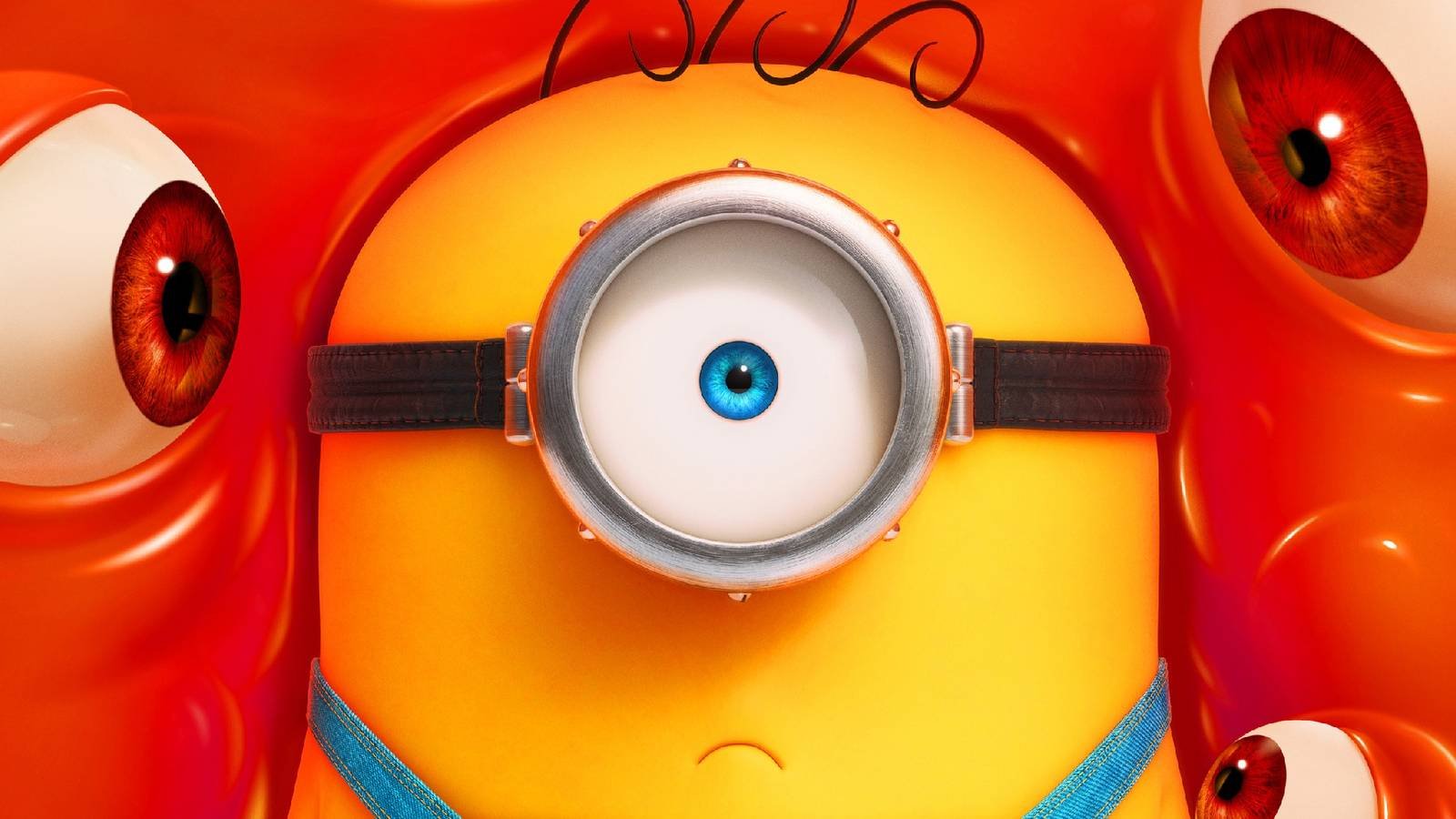
The language spoken by the Minions in the 'Despicable Me' franchise is a masterful blend of playful nonsense and recognizable words borrowed from various real-world languages, including Spanish, French, Italian, Korean, and English. This eclectic mix, combined with their exaggerated expressions and slapstick antics, perfectly encapsulates the Minions' chaotic, childlike, and universally appealing personalities. Minionese is not meant to be decoded; rather, its charm lies in its silliness and the way it enhances the Minions' comedic timing and broad emotional range, making them instantly understandable and hilariously endearing.
Shyriiwook (Star Wars – Chewbacca)
Chewbacca's native language, Shyriiwook, consists primarily of growls, roars, and grunts. Within the 'Star Wars' universe, only a select few, most notably Han Solo, can understand it, highlighting the unique bond between the Wookiee and his human co-pilot. For the audience, Shyriiwook's meaning is conveyed through Chewbacca's body language, the reactions of those who understand him, and the overarching narrative context. This approach not only lends credibility to the alien species but also emphasizes the depth of relationships forged across linguistic divides, making Chewbacca’s seemingly incomprehensible utterances deeply emotional and integral to the storytelling.
Animalese (Animal Crossing)
In the 'Animal Crossing' series, the animal villagers communicate through a unique, high-pitched, procedural 'gibberish' known as Animalese. While the game displays their dialogue in text, their spoken words are converted into rapid, unintelligible chirps and burbles. This distinctive vocalization adds immense charm and personality to each villager, making their interactions feel whimsical and distinct. Animalese fosters a sense of wonder and makes the act of engaging with the game's characters a delightful experience, contributing significantly to the series' cozy and idiosyncratic atmosphere.
Penguinese (Pingu)
The stop-motion animated series 'Pingu' masterfully utilizes a completely invented language known as Penguinese. Composed solely of expressive squawks, honks, and various vocalizations, it contains no discernible words, yet it is universally understood. The characters' emotions, intentions, and the plot itself are conveyed entirely through their nuanced intonations, exaggerated body language, and the clear visual storytelling. Penguinese is a brilliant example of how communication can transcend spoken language, proving that powerful narratives and emotional depth can be achieved through purely non-verbal means, making the show accessible to audiences of all ages and linguistic backgrounds.
The Enduring Psychological Impact on Audiences
The persistent popularity of these 'gibberish' languages speaks volumes about their profound psychological impact on audiences. By requiring viewers and players to engage their interpretive skills, these languages foster a deeper, more active form of engagement. We connect with these characters and worlds on a primal level, deciphering meaning not through intellect alone, but through empathy and emotional resonance. This shared experience of 'understanding' the incomprehensible creates a unique bond, making these fictional tongues more than just sounds; they become powerful conduits for storytelling that resonate long after the credits roll. They remind us that communication is far richer and more varied than mere words can convey.
From the comedic antics of a Swedish Chef to the heartfelt roars of a Wookiee, 'gibberish' languages have proven to be indispensable tools in the arsenal of modern storytellers. Their ability to build worlds, define characters, and evoke deep emotional responses without conventional dialogue highlights the incredible creativity inherent in entertainment. We hope this exploration has deepened your appreciation for these often-unseen facets of pop culture. To continue discovering more fascinating insights into the world of digital journalism and in-depth content, we invite you to explore other compelling articles and analyses available on NAME OF SITE.
Fonte: https://screenrant.com