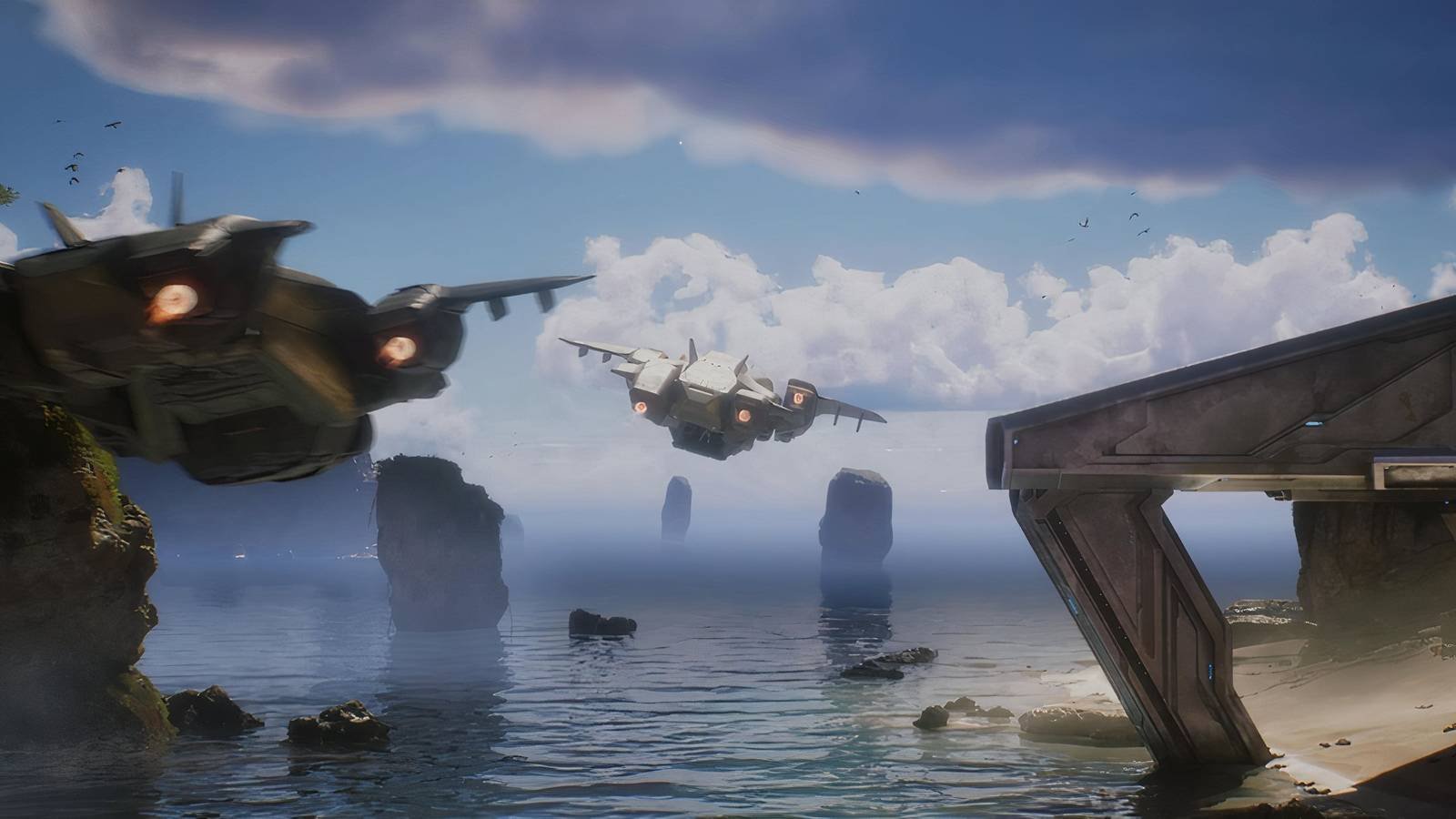
The highly anticipated release of <b>Halo: Campaign Evolved</b> has ushered in a new era for fans of the iconic franchise, meticulously revamping the original Halo: Combat Evolved experience with stunning modern graphics and profoundly overhauled gameplay. This ambitious undertaking aims to bridge the gap between nostalgic reverence and contemporary gaming standards, offering both veteran Spartans and newcomers a refreshed perspective on the foundational narrative. While many core elements will resonate with long-time players, the developers have integrated a host of new features and refined mechanics, challenging players to rethink familiar strategies and explore novel possibilities within the classic environments. Among the most intriguing discussions sparked by this evolution is the potential for unprecedented aerial navigation, leading many to ask: how exactly does one achieve flight in this enhanced campaign?
Halo: Campaign Evolved – A New Dimension of Gameplay
At its core, Halo: Campaign Evolved is more than just a graphical facelift; it's a comprehensive re-imagining designed to deepen player engagement. The commitment to an 'evolved' experience extends far beyond visual fidelity, incorporating significant adjustments to physics engines, artificial intelligence behaviors, and interactive environmental elements. These changes are crucial because they directly influence how players can interact with the game world, potentially opening avenues for movement and traversal that were either impossible or highly glitch-dependent in the original title. The development team has indicated a focus on emergent gameplay, where player creativity and understanding of the game's systems can lead to unique solutions and thrilling exploits, including, for some, the dream of sustained aerial movement.
This revamp has also introduced subtle yet impactful alterations to existing vehicles and equipment. For instance, the M12 Warthog, a staple of Halo combat, might exhibit new handling characteristics, or its collision physics could be tweaked in ways that inadvertently (or intentionally) facilitate mid-air stunts. Similarly, changes to grenade physics or weapon recoil could contribute to advanced movement techniques previously unseen. These granular modifications collectively contribute to an environment ripe for experimentation, encouraging players to push the boundaries of conventional gameplay and discover hidden capabilities, particularly concerning verticality and horizontal traversal in unexpected ways.
The Allure of Flight: Historical Context in Halo
In the history of the Halo franchise, true, unassisted flight for the Master Chief has largely remained within the realm of fantasy, often achieved only through elaborate glitches, third-party modifications, or designated flying vehicles. Early iterations of Halo were renowned for their robust physics engines, which, while primarily designed for combat and vehicle interaction, inadvertently allowed for a vibrant community of glitch-hunters to discover gravity-defying maneuvers. Techniques such as 'grenade jumping' or 'rocket jumping' became iconic, propelling players to seemingly inaccessible areas and providing fleeting moments of aerial freedom. However, these were often difficult to master, inconsistent, and not considered official gameplay mechanics. The desire for independent flight stems from a deep-seated player fantasy: to soar above the battlefields, gaining a tactical advantage or simply enjoying the breathtaking vistas from a new perspective.
Previous titles introduced elements like the Jetpack as an armor ability in Halo: Reach, offering limited, controlled bursts of vertical mobility. While this scratched the itch for some aerial movement, it was far from sustained flight. Halo: Campaign Evolved, by promising 'overhauled gameplay,' naturally fuels speculation about new forms of mobility. Players are eager to know if the developers have finally integrated an official, more intuitive system for sustained flight or if the new physics merely allow for more sophisticated exploits of existing mechanics, pushing the boundaries of what was previously possible without breaking the game entirely.
Methods of Aerial Maneuvering in Campaign Evolved
Official New Mechanics: The Grav-Lift Module
One of the most significant rumored additions in Halo: Campaign Evolved that directly addresses the concept of flight is the potential introduction of the <b>Grav-Lift Module</b>. This experimental Spartan armor upgrade, ostensibly developed by UNSC research divisions, allows for short bursts of controlled anti-gravity propulsion. Unlike the limited upward thrust of traditional jetpacks, the Grav-Lift Module enables players to achieve a sustained glide and even some horizontal translation when activated strategically. Its duration is tied to an energy meter, encouraging tactical use rather than indiscriminate soaring. Mastering this module involves understanding momentum conservation and environmental interaction, allowing players to traverse large gaps, bypass ground-based enemies, or gain elevated vantage points during critical encounters. While still limited, it represents a substantial step towards official, in-campaign aerial mobility.
Advanced Vehicle Exploitation: The Falcon's Edge
Beyond new modules, the revamped physics engine in Halo: Campaign Evolved has subtly altered the flight dynamics of certain vehicles, particularly the iconic <b>UNSC Falcon</b>. Previously, Falcons were designed for precise, low-altitude transport and support. In the Evolved campaign, astute pilots have discovered that by combining precise throttle control with specific environmental interactions – such as grazing surfaces at high speed or exploiting unique wind currents introduced in certain outdoor maps – the Falcon can achieve extended periods of surprisingly stable, high-altitude flight. This isn't an explicit feature but rather an emergent property of the refined physics system. Pilots skilled in 'edge-gliding' or 'thermal drafting' can use the Falcon to scout ahead, deliver precise air support, or even perform daring evacuations from previously unreachable locations, adding a layer of strategic depth to vehicular combat and traversal.
The Glitch Enthusiast's Renaissance: Physics Anomalies
For the more adventurous players, Halo: Campaign Evolved also presents a fertile ground for discovering and perfecting physics anomalies. The refined collision detection and object interaction, while generally more stable, have introduced new permutations for classic 'grenade jumps' and 'object launches.' For instance, players have documented a specific sequence involving the plasma grenade and a specific environmental destructible, allowing for a perfectly timed explosion to propel Master Chief significant distances upwards and forwards. These advanced maneuvers require impeccable timing and precise positioning, making them a challenge even for seasoned players. The community is actively cataloging these discoveries, transforming apparent bugs into features that enrich speedrunning and exploration, proving that sometimes, flight is merely a matter of understanding the system's hidden eccentricities.
Mastering Aerial Gameplay: Tips for Aspiring Pilots
To truly embrace the aerial possibilities in Halo: Campaign Evolved, practice and keen observation are paramount. For those utilizing the Grav-Lift Module, prioritize upgrades that extend its energy capacity and recharge rate. Familiarize yourself with each campaign map's vertical architecture, identifying key vantage points and traversal shortcuts. With vehicles like the Falcon, spend time in custom games to understand its new flight model; gentle, sustained inputs often yield better results than aggressive maneuvers for high-altitude stability. For glitch-based flight, consulting community guides and watching demonstration videos can significantly reduce the learning curve. Experimentation with different weapon types for their recoil properties and projectile trajectories can also unlock novel jump boosts. Remember, the game rewards those who meticulously explore its mechanics.
Understanding the dynamic interplay between your equipment, the environment, and enemy AI is crucial. Aerial positions can offer unmatched tactical advantages, allowing for surprise attacks on ground forces or bypassing heavily fortified choke points. However, verticality also exposes you to greater enemy fire, particularly from long-range precision weapons. Learning when to ascend and when to remain grounded is a skill developed through experience. The art of flying in Halo: Campaign Evolved is not about defying gravity arbitrarily, but about strategically leveraging newly introduced or refined mechanics to redefine your approach to combat and exploration, adding an exhilarating layer of depth to the classic experience.
Halo: Campaign Evolved truly reimagines the legendary journey, offering players not just a visual upgrade but a fundamentally richer gameplay experience. Whether you prefer the official Grav-Lift Module, advanced vehicle mastery, or the intricate art of physics exploitation, the sky is now, more than ever, within reach. The ability to navigate the environments with a newfound vertical freedom transforms familiar battlefields into dynamic playgrounds, encouraging repeat playthroughs and innovative strategies. Dive deeper into the expanded universe, discover hidden secrets, and redefine your combat approach. For more exclusive insights, guides, and the latest news on Halo: Campaign Evolved and other groundbreaking titles, continue exploring NAME OF SITE for unparalleled gaming journalism and expert analysis.
Fonte: https://screenrant.com