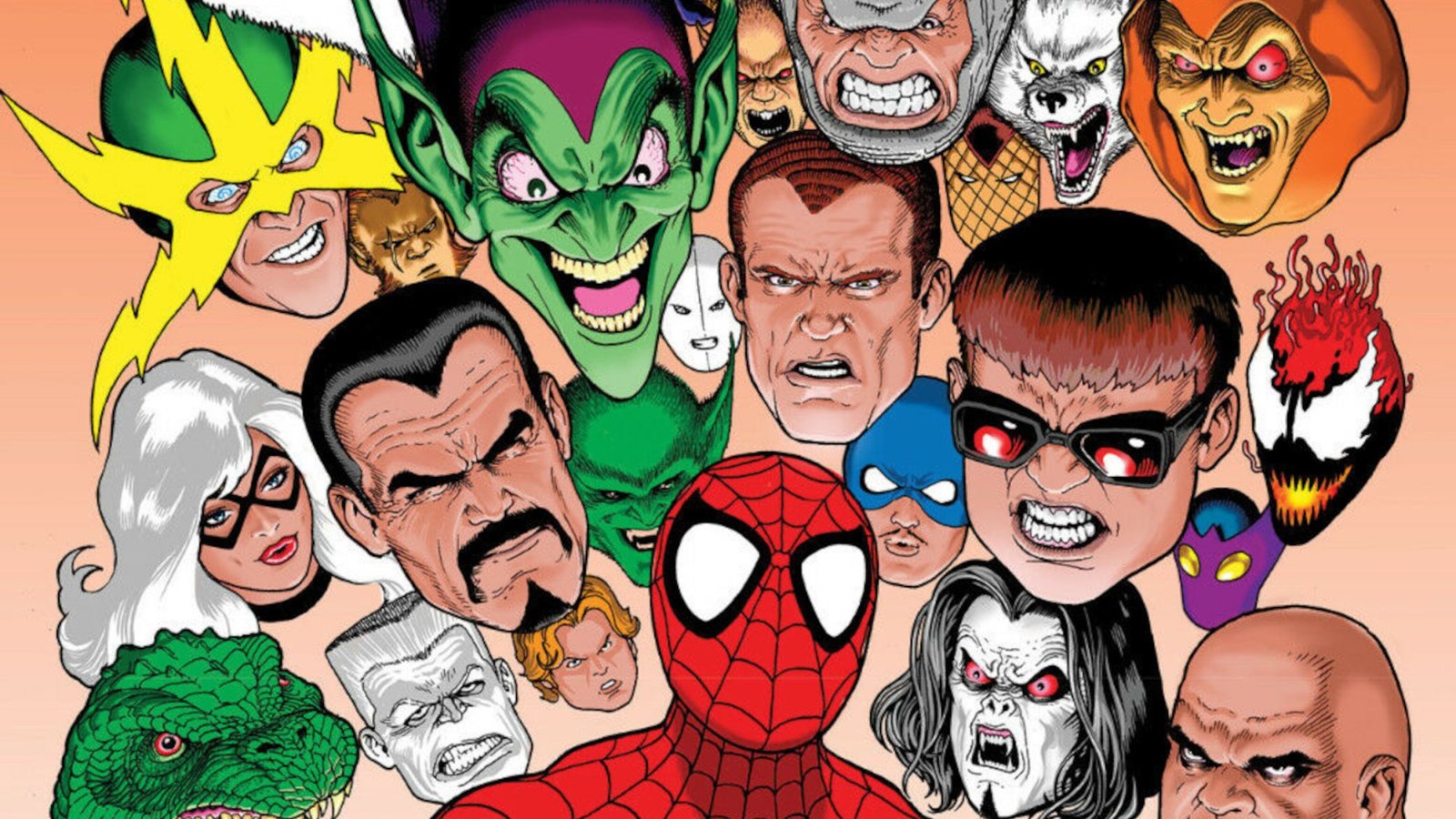
Few characters in the vast pantheon of comic book heroes have enjoyed as many live-action adaptations as Spider-Man. Across three distinct cinematic iterations – Sam Raimi's original trilogy, Marc Webb's 'Amazing Spider-Man' reboot, and Tom Holland's tenure within the Marvel Cinematic Universe – the friendly neighborhood wall-crawler has graced the silver screen in nine theatrical features. This impressive count doesn't even include the critically acclaimed animated 'Spider-Verse' films. Throughout these productions, a significant portion of Spider-Man's legendary rogue's gallery has been brought to life, including formidable foes like Green Goblin, Doctor Octopus, Sandman, the Lizard, Electro, Vulture, Mysterio, and even the Kingpin, with several receiving multiple on-screen portrayals. Sony Pictures has further expanded this universe, introducing characters such as Venom, Morbius, and Kraven the Hunter in their own standalone films, albeit without Spider-Man himself as a central figure.
The recently released film, 'Spider-Man: Brand New Day,' directed by Destin Daniel Cretton, continued this trend of expanding the cinematic roster. Its dynamic opening montage introduced a flurry of new antagonists to the big screen, including Tarantula, Boomerang (played by Aidan Kennedy), Ramrod (Billy Clements), and Tombstone (Marvin Jones III). Furthermore, the movie featured Mac Gargan's (Michael Mando) complete transformation into the iconic Scorpion. Despite this latest influx of villains into the cinematic universe, a surprising handful of truly iconic Spider-Man antagonists – characters deeply ingrained in the web-slinger's comic book history and mythology – have yet to make a substantial, fully realized appearance in any feature film. This oversight leaves a significant amount of rich narrative and character potential untapped, much to the anticipation of long-time fans.
Black Cat: The Feline Femme Fatale
Felicia Hardy, better known as the Black Cat, was conceived by writer Marv Wolfman and artist Dave Cockrum, first appearing in 'The Amazing Spider-Man' #194 in July 1979. Wolfman initially envisioned her as a noir mystery villainess, drawing inspiration from the classic Tex Avery cartoon 'Bad Luck Blackie.' Her origin is deeply rooted in tragedy and a desire to honor her master thief father, Walter Hardy. Felicia's initial motivation for donning her distinctive cat burglar costume was to break her dying father out of prison, a daring heist that inevitably led her into a complicated and long-standing relationship with Spider-Man. This dynamic often blurs the lines between adversarial and romantic, making Black Cat one of Spider-Man's most complex and emotionally resonant figures.
Beyond her exceptional agility, martial arts prowess, and thieving skills, Black Cat possesses a unique 'bad luck' power. This ability, acquired through a deal with the notorious crime lord Wilson Fisk (Kingpin), allows her to subtly manipulate probability fields, causing misfortune for those around her, particularly her adversaries. This power adds a thrilling, unpredictable element to her encounters with Spider-Man, transforming standard confrontations into tests of wit and chance. While an Oscorp employee named Felicia, portrayed by Felicity Jones, appeared in 2014's 'The Amazing Spider-Man 2,' the character was never explicitly confirmed as Walter Hardy's daughter nor did she ever don the Black Cat costume. A dedicated film, 'Silver & Black,' which would have paired Felicia Hardy with mercenary Silver Sable, was in development with Gina Prince-Bythewood attached to direct in 2017. Despite costume designs and a planned February 2019 release, script delays led to the project's shelving in August 2018, with Sony's plans for separate Black Cat and Silver Sable solo films failing to materialize beyond initial announcements. Her compelling blend of moral ambiguity, unique powers, and volatile relationship with Spider-Man makes her a prime candidate for a compelling cinematic debut.
Mister Negative: The Duality of Light and Shadow
Mister Negative, introduced by writer Dan Slott and artist Phil Jimenez in 'Free Comic Book Day: The Amazing Spider-Man' #1 in May 2007, quickly rose to prominence as a significant force in Spider-Man's lore. He became a central antagonist in the year-long 'Brand New Day' comic arc, which ran through 'The Amazing Spider-Man' in 2008. The villain's unique premise revolves around a stark duality: he is Martin Li, a benevolent and philanthropic founder of the F.E.A.S.T. (Food, Emergency Aid, Shelter, and Training) homeless shelters, genuinely dedicated to helping the less fortunate. Simultaneously, he is the ruthless, superpowered crime lord Mister Negative, who commands the feared Inner Demons gang. This stark contrast between his public persona and his secret criminal identity offers rich thematic potential for exploring moral corruption and the nature of good and evil.
Mister Negative's powers stem from exposure to Darkforce energy, which gives him a 'negative' inversion appearance, mirroring a photographic negative, when he shifts personas. His touch can have two profound effects: it can either heal and purify individuals, or it can corrupt them, pushing their morality to its extreme opposite. This ability, coupled with his mastery of martial arts and control over the shadowy Inner Demons, makes him a formidable physical and psychological threat. Despite the cinematic 'Spider-Man: Brand New Day' borrowing its title from the comic era that heavily featured Mister Negative, the film notably opted for a different antagonist in Jean Grey (Sadie Sink). However, Mister Negative's profile received a massive boost through his role as one of the primary antagonists in Insomniac's critically acclaimed 'Marvel's Spider-Man' video game in 2018. The game's compelling portrayal showcased his complex motivations and visually striking powers, cementing his status as a fan-favorite and demonstrating his significant potential for a successful transition to the big screen, offering a villain with depth, unique visual appeal, and a profound personal connection to Peter Parker through Martin Li's charitable work.
Jackal: The Architect of Identity Crisis
Miles Warren, initially introduced by Gerry Conway and Steve Ditko in 'The Amazing Spider-Man' #31 in December 1965, began his comic book life as an unassuming biology professor at Empire State University. It wasn't until nearly a decade later, in 'The Amazing Spider-Man' #129, that Conway and artist Gil Kane transformed him into the sinister Jackal. His tragic descent into villainy was catalyzed by the untimely death of Gwen Stacy at the hands of Norman Osborn. Warren, who harbored an unhealthy, obsessive affection for his student, tragically blamed Peter Parker for Gwen's demise. This twisted grief and desire for revenge drove him to utilize his genius in genetics, leading to his transformation into a deranged clone-master operating from his ESU laboratory.
The Jackal's primary weapon and enduring legacy is his mastery of cloning technology. In 'Amazing Spider-Man' #149 in October 1975, Warren unveiled a clone of Peter Parker, seemingly dying in the same issue. This pivotal event, however, laid the groundwork for one of Spider-Man's most intricate and controversial storylines: the 1990s 'Clone Saga.' This saga brought the clone back as Ben Reilly, who not only served as the Scarlet Spider but even took on the mantle of Spider-Man for a significant period. Another significant clone, Kaine Parker, also emerged from Warren's experiments, further complicating Peter's life. The Jackal's schemes continuously challenge Peter Parker's very identity, forcing him to question his existence, memories, and sense of self. This psychological torment, combined with the dramatic potential of cloning a hero, offers a unique brand of villainy unlike any other Spider-Man antagonist already seen in films. While the 'Clone Saga' is infamous for its complexity, a streamlined adaptation of the Jackal's fundamental threat – creating doppelgängers and sowing confusion – could provide an incredibly compelling and emotionally resonant story for a new generation of cinematic audiences.
The Future of Spider-Man's Cinematic Foes
The vast and diverse gallery of Spider-Man villains is a testament to the character's enduring appeal and the endless narrative possibilities he presents. While the cinematic universe has successfully brought many iconic antagonists to life, the absence of characters like Black Cat, Mister Negative, and Jackal represents a significant untapped resource. Each of these villains offers distinct narrative avenues, from Black Cat's morally ambiguous romantic entanglement and probability-altering powers to Mister Negative's profound exploration of duality and corruption, and the Jackal's existential threat through cloning. As superhero cinema continues to evolve, delving deeper into complex character arcs and innovative storytelling, the opportunity to introduce these long-awaited figures becomes increasingly promising. Their arrival could inject fresh perspectives and thrilling new challenges into Spider-Man's cinematic journey, further solidifying his status as one of pop culture's most beloved and dynamic heroes.
The rich tapestry of Spider-Man's world is far from fully explored on the big screen, and the potential for new, groundbreaking stories with these compelling villains is immense. To discover more about the intricate lore of your favorite heroes and villains, and to stay updated on all the latest developments in the world of comic book adaptations, be sure to continue browsing NAME OF SITE for in-depth analyses, news, and exclusive content.
Fonte: https://comicbook.com