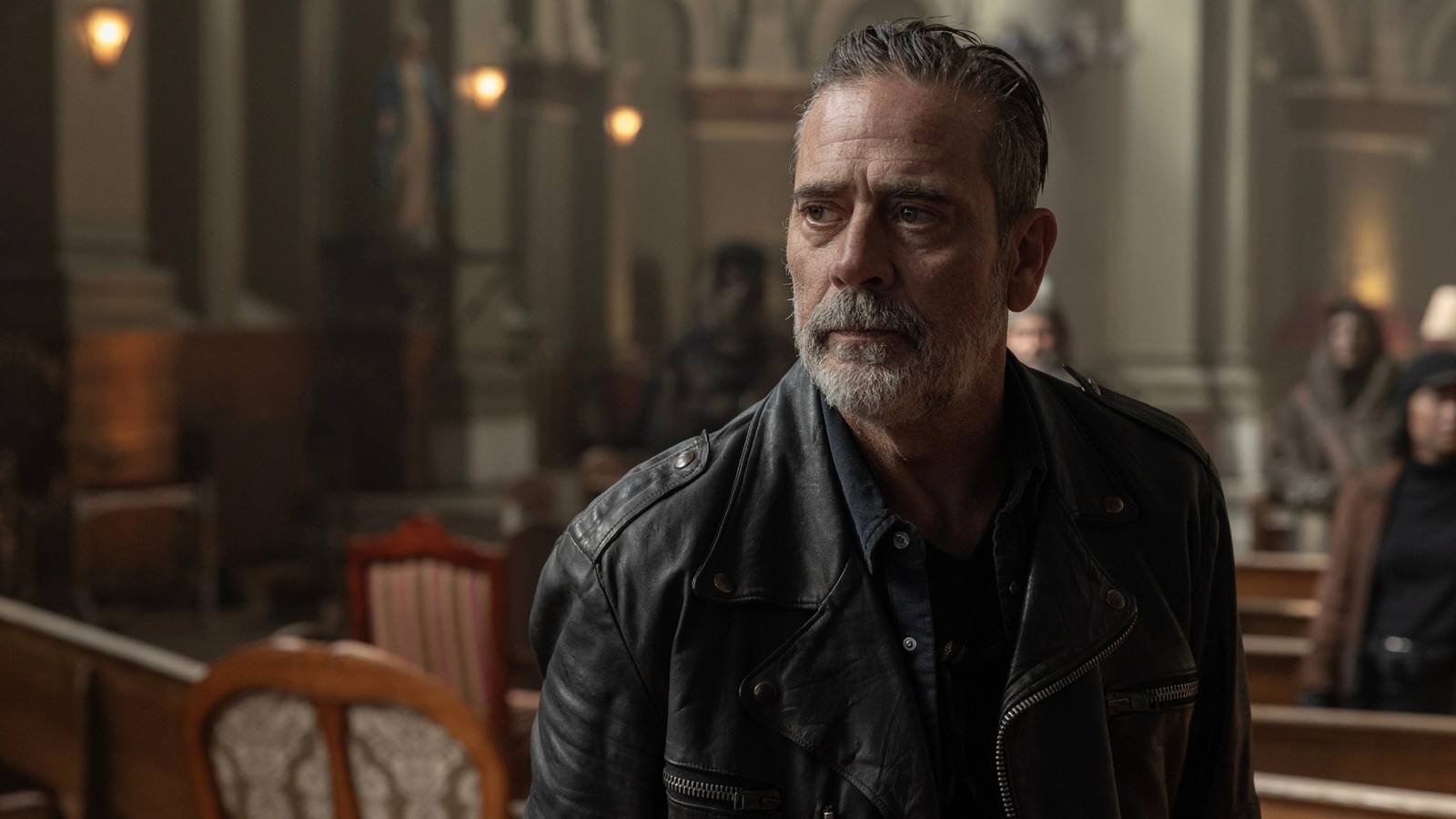
The highly anticipated return of <i>The Walking Dead: Dead City</i> for its third season has sparked a fascinating and somewhat perplexing debate among fans and critics alike. As one of the summer's most talked-about premieres, the spin-off series, which follows the compelling and often fraught journey of Negan (Jeffrey Dean Morgan) and Maggie Rhee (Lauren Cohan) through a post-apocalyptic Manhattan, arrived on AMC+ in late July. While professional critics have lauded the initial episodes, awarding the season a remarkable 100% score on Rotten Tomatoes, the audience reception tells a starkly different story, with an average score of just 48%. This significant disparity prompts a deeper exploration into the factors influencing these divergent perspectives and what they signify for the future of the beloved zombie franchise.
The Rotten Tomatoes Dichotomy: Critics Versus Community
Rotten Tomatoes, as a leading aggregate review site, compiles critical responses and audience feedback into easily digestible scores. The 'Tomatometer' reflects the percentage of professional critics who have given a movie or TV show a positive review, while the 'Audience Score' represents the percentage of verified users who rated it 3.5 stars or higher out of 5. A 100% critic score is a rare achievement, suggesting universal acclaim from professional reviewers, who often assess elements like narrative originality, character development, thematic depth, production quality, and directorial vision. Conversely, a 48% audience score indicates that a majority of viewers felt the show was merely mediocre or actively disappointing. This chasm between expert opinion and popular sentiment is not unprecedented in the entertainment industry, but it is particularly striking for a show within a well-established and passionately followed universe like <i>The Walking Dead</i>, underscoring fundamental differences in what each group values and expects from a narrative.
The Critics' Enthusiasm: Decoding the Perfect Score
Professional critics often approach new seasons, especially those within a long-running franchise, with a lens focused on innovation and artistic merit. For <i>Dead City</i> season 3, the 100% Rotten Tomatoes score likely reflects critical appreciation for several key elements. Reviewers may be commending the series for successfully reinvigorating the familiar zombie apocalypse setting by transplanting its core characters into the claustrophobic and dangerous urban landscape of Manhattan. The show's commitment to exploring the complex, evolving dynamic between Negan and Maggie, two characters burdened by a shared, traumatic history, could be seen as a narrative strength. Their forced alliance against new threats in a decaying metropolis provides fertile ground for nuanced character development and morally ambiguous choices, which critics often praise as sophisticated storytelling. Furthermore, the show might be lauded for its atmospheric tension, creative new walker designs, and a willingness to explore darker, more psychological themes that push beyond conventional zombie fare, offering a fresh perspective on a universe that many felt had become somewhat stagnant.
The critical reception could also be influenced by the series' ability to maintain a tight, focused narrative arc, a departure from the often sprawling and ensemble-heavy structure of the main <i>The Walking Dead</i> series. By concentrating on two pivotal characters and a specific mission, <i>Dead City</i> may offer a more streamlined and impactful viewing experience that resonates with critics looking for compelling, self-contained storytelling within a larger universe. The performances of Jeffrey Dean Morgan and Lauren Cohan, who have consistently delivered powerful portrayals of their respective characters, undoubtedly contribute to the critical acclaim, providing a strong emotional core that elevates the material.
Audience Discontent: The Roots of a 48% Rating
The audience's significantly lower score of 48% suggests that a substantial portion of viewers did not connect with the new season in the same positive way. Several factors could contribute to this dissatisfaction. Franchise fatigue is a common issue for long-running series, and with numerous spin-offs (including <i>Fear the Walking Dead</i>, <i>Daryl Dixon</i>, and <i>The Ones Who Live</i>) expanding the <i>Walking Dead</i> universe, some viewers might feel overwhelmed or that the core premise has become diluted. Audiences often seek clear progression and resolution for beloved characters, and if season 3 introduces new conflicts without adequately addressing previous ones, or if character motivations feel inconsistent with established arcs, it can lead to frustration. The continued exploration of Negan's redemption arc, for instance, while critically interesting, might still be a point of contention for viewers who struggle to reconcile his past atrocities with his current role as an unlikely anti-hero.
Moreover, initial audience reactions are often based on the first two episodes, which may not fully represent the season's overall trajectory. Pacing issues, a perceived lack of immediate action, or a narrative that takes too long to develop its central plot could disappoint viewers accustomed to faster-paced television. The tone or thematic shifts, if deemed too radical from the original series' grim realism, might alienate a segment of the fanbase. Audiences also typically hold a deep attachment to the existing lore and world-building of a franchise. Any perceived inconsistencies, departures from established rules, or the introduction of new elements that feel unnatural or forced can elicit a negative response. The shift in setting to a heavily urbanized, isolated Manhattan, while visually striking, might also feel less relatable or compelling than the more varied landscapes explored in the main series, impacting viewer immersion.
The Weight of Expectations and Spin-off Challenges
The very nature of being a spin-off comes with inherent challenges. Viewers carry high expectations, often hoping for the same magic that captivated them in the original series, while simultaneously desiring something fresh and innovative. Striking this balance is incredibly difficult. If <i>Dead City</i> season 3 is perceived as merely retreading familiar territory or, conversely, deviating too far from the beloved elements of the franchise, it risks alienating a significant portion of its dedicated fanbase. The audience score reflects a collective sentiment that, for whatever reason, the initial offerings of this season failed to meet these often-conflicting expectations, leading to a palpable sense of disappointment despite the critical acclaim.
Navigating the Future of the 'Dead City' Narrative
This striking divide between critical praise and audience dissatisfaction presents a unique challenge for AMC+ and the creators of <i>The Walking Dead: Dead City</i>. While critical acclaim is valuable for prestige and industry recognition, sustained viewership ultimately hinges on audience engagement and satisfaction. For future episodes, the show faces the task of either winning over skeptical viewers by addressing their concerns or continuing on its critically acclaimed path, potentially at the risk of further alienating a segment of its original fanbase. The evolution of audience scores as more episodes are released will be a key indicator of whether the initial disappointment was an anomaly or a sustained sentiment. This situation underscores the complex dynamics of modern television consumption, where diverse perspectives contribute to a multifaceted understanding of a show's impact and success.
Understanding this dichotomy requires appreciating the distinct metrics used by critics and the broader audience. While critics focus on artistic merit and narrative innovation, audiences often prioritize entertainment value, character consistency, and the fulfillment of emotional expectations developed over years of engagement with a franchise. The divergence for <i>Dead City</i> season 3 highlights the ongoing tension between these two crucial evaluative lenses, offering a compelling case study in the subjective nature of storytelling success.
The ongoing narrative of <i>The Walking Dead</i> universe, particularly with its continued expansion into various spin-offs, is a testament to its enduring appeal. The critical success of <i>Dead City</i> season 3, contrasted with its audience reception, offers valuable insights into the evolving landscape of television and fan engagement. As the season progresses, it will be interesting to see if the audience score begins to align more closely with the critics' enthusiasm, or if this intriguing paradox persists. For more in-depth analyses, exclusive interviews, and breaking news from the world of television and entertainment, be sure to continue browsing NAME OF SITE, your ultimate source for comprehensive content.
Fonte: https://screenrant.com