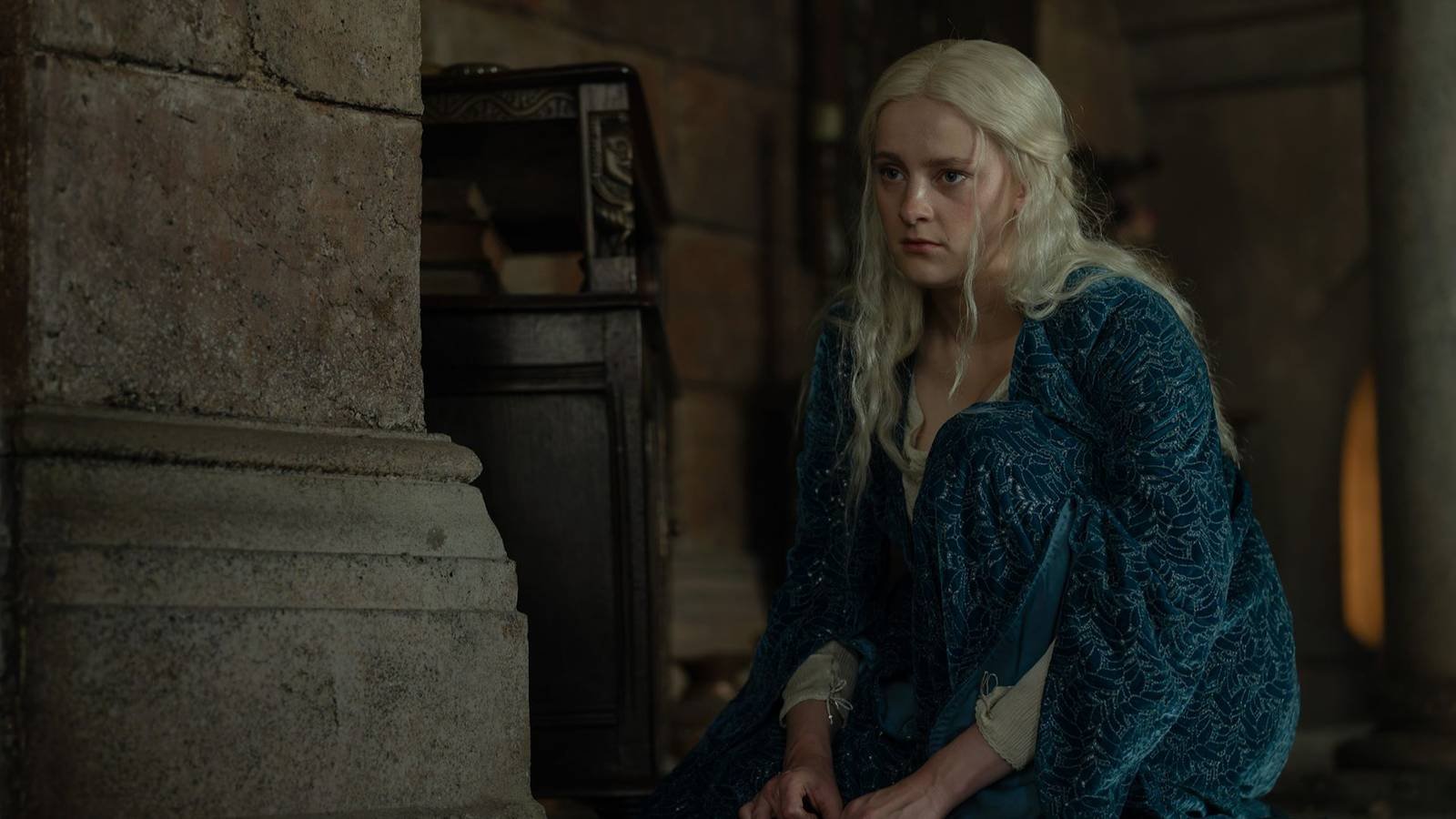
The latest installment of HBO's critically acclaimed series, *House of the Dragon*, has introduced a plot twist that promises to significantly alter the landscape of Westeros and the impending Dance of the Dragons. In season 3, episode 4, viewers were met with the revelation that Queen Helaena Targaryen, wife to King Aegon II, is pregnant. This disclosure is far more than a simple character detail; it represents a substantial deviation from George R.R. Martin's source material, *Fire & Blood*, injecting new layers of political complexity, dramatic tension, and personal tragedy into the already volatile conflict between the Greens and the Blacks. This unexpected development deepens the show's narrative, challenging established lore and setting the stage for even greater stakes as the Targaryen civil war escalates.
A Significant Divergence: Helaena's Pregnancy and the Canon Timeline
The original text of *Fire & Blood* details the lives and lineages of the Targaryen dynasty with meticulous precision. Within this historical account, Helaena Targaryen is noted to have three children with her brother-husband, Aegon II: the twins Jaehaerys and Jaehaera, and a younger son named Maelor. Crucially, the book suggests that Maelor was born well before Rhaenyra Targaryen made her claim for the Iron Throne and certainly before the full-blown eruption of the Dance of the Dragons. The show's decision to place Helaena's pregnancy at this specific juncture, with the civil war brewing intensely and Rhaenyra's coronation as Queen already a point of contention, fundamentally shifts the context of this impending birth. It transforms what was a historical footnote in the annals of Westeros into a live, pressing political and dynastic concern, directly impacting the current power struggle and the legitimacy of Aegon II's claim.
This alteration is not merely a cosmetic change; it's a strategic narrative choice by the showrunners. By introducing a new pregnancy now, the series amplifies the immediate stakes for the Green faction. An unborn child, particularly a potential male heir, becomes a powerful symbol of succession and continuity for Aegon II's line, providing renewed impetus for his supporters to fight for his claim. Simultaneously, it could be perceived as a vulnerability, adding another innocent life to the perilous dance of power. The timing suggests an intentional effort to consolidate narrative threads and heighten emotional impact, making Helaena's personal experience undeniably intertwined with the fate of the realm, rather than existing as a pre-war backdrop.
The Stakes of Succession: An Heir in Tumultuous Times
In the world of Westeros, an heir is currency, legitimacy, and often, a target. Helaena's pregnancy, revealed on the cusp of full-scale war, immediately raises the ante for the Greens. King Aegon II, whose claim to the throne is already fiercely contested by his half-sister Rhaenyra, now has the prospect of another child to solidify his lineage. Should the child be a son, it would provide an additional, undeniable male heir, further strengthening the argument for male-preference primogeniture championed by the Greens. This is not just a personal matter for Helaena and Aegon; it's a political weapon in the propaganda war, a promise of continued male rule that could sway lords and common folk alike, emphasizing the Greens' commitment to tradition.
Helaena's Vulnerability and Foreshadowing Tragedy
Beyond the political ramifications, the pregnancy adds a profound layer of personal tragedy and vulnerability to Helaena's character. Known for her gentle nature, her prophetic but often misunderstood pronouncements, and her somewhat detached demeanor, Helaena is already a fragile figure within the cutthroat court. Bearing a child amidst a burgeoning civil war places immense psychological and physical strain on her. Fans of the books are acutely aware of the grim fates that befall Helaena's children during the Dance of the Dragons. Introducing this pregnancy now foreshadows an even more poignant and devastating series of events, as viewers become more invested in the innocent lives caught in the crossfire. The show effectively leverages this emotional weight, preparing audiences for the heart-wrenching consequences of the Targaryen conflict.
Creative Liberties and Narrative Enhancement in Adaptation
*House of the Dragon* has, from its inception, taken certain creative liberties with its source material, *Fire & Blood*. These changes are typically implemented to streamline complex narratives, enhance character arcs, or deepen dramatic tension for a visual medium. Examples include the accelerated timeline in the earlier seasons to portray the characters' growth and the rapid escalation of political feuds. Helaena's pregnancy is another such calculated alteration. By delaying Maelor's conception and placing it strategically in the immediate pre-war period, the show tightens the narrative focus. It prevents the need for extensive exposition about off-screen births and instead integrates the event directly into the ongoing power struggle, making it an immediate, impactful factor rather than a distant historical detail.
This approach also serves to humanize the often-stoic or politically driven figures of Westeros. Helaena, frequently seen as a pawn in her family's schemes, gains a renewed sense of agency and vulnerability through this personal journey. Her condition underscores the often-overlooked domestic suffering and personal sacrifices demanded by political ambition and dynastic conflict. By making her pregnancy a current event, the series can more effectively explore its impact on her character, her already strained relationship with Aegon, and the public perception of the Green faction, adding emotional depth that might be harder to convey if these events were merely recounted as past occurrences from the book's 'history' perspective.
The Unfolding Tragedy: Implications for Future Episodes
Helaena's pregnancy is not an isolated event but a critical node in the unfolding tapestry of the Dance of the Dragons. It guarantees that the show will continue to explore themes of succession, sacrifice, and the devastating impact of war on individuals and families. For the Greens, the child represents a beacon of hope and a symbol of their dynasty's continuation, yet it simultaneously casts a long shadow of impending doom, given the inherent violence of the coming conflict. This revelation promises to heighten the emotional stakes for viewers, as they witness the birth of a child into a world already tearing itself apart. The decision to make this pregnancy a central plot point ensures that the series continues to surprise and engage, even for those intimately familiar with the source material, crafting a compelling and uniquely adapted narrative.
The implications of this altered timeline extend beyond Helaena; they affect the motivations and strategies of all key players. How will Rhaenyra and the Blacks react to the news of another potential Green heir? Will this galvanize their resolve or introduce new strategic considerations? The show is expertly weaving these changes into its fabric, demonstrating a commitment to creating a dynamic and impactful story that resonates deeply with its audience. As the Dance of the Dragons truly begins, Helaena’s pregnancy stands as a powerful symbol of the innocence and future that will be irrevocably scarred by the brutal civil war.
The complex layers added by Helaena's pregnancy are a testament to *House of the Dragon*'s commitment to in-depth storytelling, ensuring that every plot point serves to deepen the narrative and heighten the emotional resonance of the unfolding conflict. To delve further into the intricacies of Westerosi politics, character analyses, and predictions for the upcoming episodes, continue browsing NAME OF SITE for more exclusive content and expert insights.
Fonte: https://screenrant.com