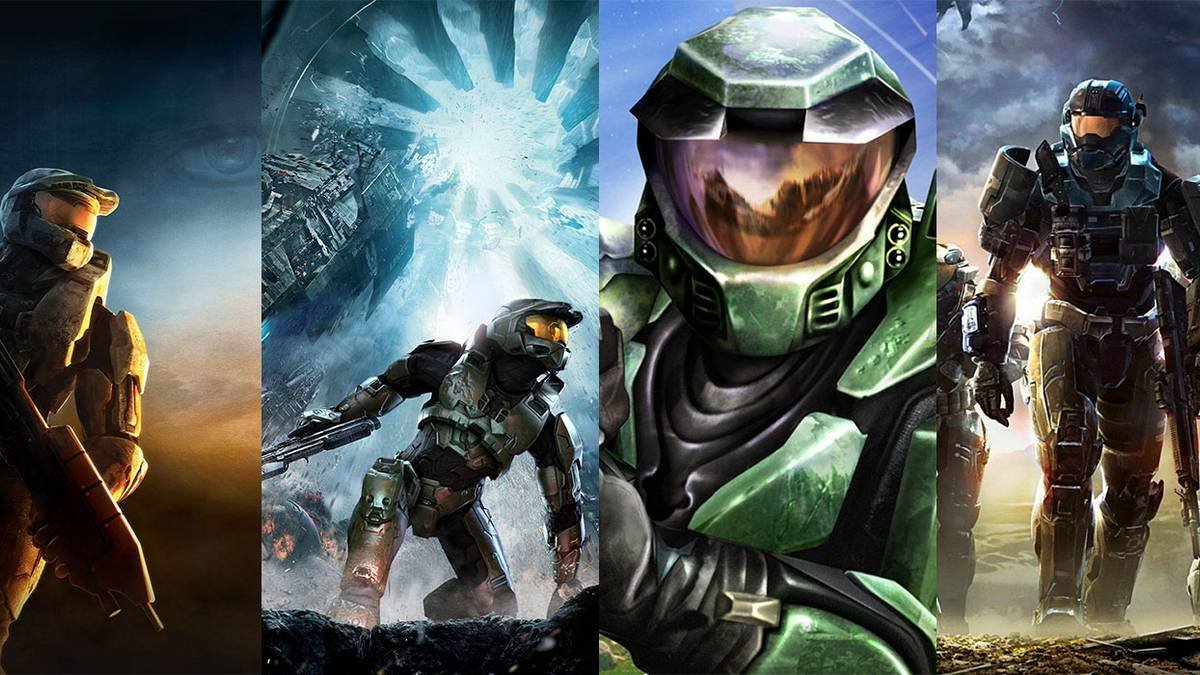
Few video game franchises command the same reverence and enduring influence as <b>Halo</b>. For over two decades, this science fiction epic has transcended mere entertainment to become a cultural touchstone, shaping the landscape of the first-person shooter (FPS) genre and indelibly impacting the gaming industry. From its pivotal role in saving the original Xbox console's launch to pioneering online matchmaking formulas still in use today, Halo's legacy is immense. Its stoic super-soldier, Master Chief, has become an instantly recognizable icon, synonymous with excellence in interactive storytelling and competitive play. As fans look back at the numerous entries in this sprawling saga, a perennial question arises: which Halo game truly stands as the pinnacle of the series?
The Unparalleled Legacy of a Pillar Franchise
The genesis of <b>Halo: Combat Evolved</b> in 2001 was nothing short of revolutionary. Developed by Bungie and published by Microsoft Game Studios, it presented a captivating narrative of humanity's struggle against the alien Covenant, set against breathtaking vistas of a mysterious ringworld. More than just a compelling story, Halo introduced console gamers to fluid, precise first-person shooting controls, a two-weapon limit encouraging strategic engagement, and innovative enemy AI that challenged players dynamically. Its local split-screen multiplayer was a revelation, fostering countless hours of competitive and cooperative play, forging friendships, and sparking rivalries. Beyond its initial impact, Halo laid the groundwork for modern console FPS design, influencing everything from control schemes to mission structures across countless titles that followed. This early success solidified the Xbox's position in the console market, transforming a risky venture into a formidable contender.
The franchise continued to innovate, particularly with its groundbreaking online multiplayer. <b>Halo 2</b>, released in 2004, not only delivered a more expansive narrative and refined gameplay but also revolutionized online console gaming with Xbox Live. Its robust matchmaking system, party features, and dedicated servers set new standards for competitive online play, creating a vibrant community that would grow exponentially. This commitment to both single-player narrative depth and robust multiplayer experiences became a hallmark of the series, ensuring its continued relevance and popularity long after its initial groundbreaking achievements. The narrative itself expanded into a rich universe of lore, explored through novels, comics, and spin-off games, deepening players' connection to the characters and conflicts within.
Establishing Evaluation Criteria for the Halo Saga
To objectively assess and rank the diverse entries in the Halo franchise, a multifaceted approach is essential. Our evaluation considers several critical elements that collectively define a game's impact and quality. Foremost among these is the <b>campaign's narrative and gameplay</b>: its story's coherence, character development, mission design, and overall engagement. Secondly, the <b>multiplayer experience</b> is crucial, examining map design, weapon balance, innovative game modes, and its long-term viability within the competitive landscape. Thirdly, we consider <b>technical performance and innovation</b>, assessing how each game pushed graphical boundaries, introduced new mechanics, or refined existing ones. Lastly, <b>community impact and legacy</b> weigh heavily, acknowledging how a game resonated with players, contributed to the franchise's lore, or influenced the broader gaming world. These criteria allow for a comprehensive and fair assessment, moving beyond mere nostalgia to analyze each title's strengths and weaknesses.
Ranking the Halo Saga: From Experimental Efforts to Enduring Masterpieces
Embarking on the difficult task of ranking the Halo games reveals a spectrum of experiences, from ambitious experiments to genre-defining triumphs. At the lower end of the spectrum, games like <b>Halo: Spartan Assault</b> and <b>Halo: Spartan Strike</b>, while offering enjoyable twin-stick shooter mechanics, fundamentally diverge from the core FPS experience. Their mobile-first design and smaller scope place them as interesting diversions rather than flagship entries, lacking the expansive worlds and narrative depth expected from a main series title. Similarly, the real-time strategy (RTS) spin-offs, <b>Halo Wars</b> and <b>Halo Wars 2</b>, stand as excellent examples within their genre, offering compelling strategies and rich lore for RTS enthusiasts. However, for many traditional Halo fans, they represent a departure from the iconic first-person combat that defines the franchise.
Moving into the core FPS entries, <b>Halo 5: Guardians</b> (2015) often sparks debate. While its multiplayer was robust, featuring refined arena combat and a compelling Warzone mode, the campaign narrative was widely criticized for its fragmented storytelling and reliance on secondary characters. The shift in gameplay mechanics, introducing Spartan Abilities like thrust and ground pound, alienated some long-time players who preferred the more traditional 'boots on the ground' feel. Preceding it, <b>Halo 4</b> (2012) marked 343 Industries' first foray into the main series. It delivered a deeply personal story for Master Chief and Cortana, with stunning visuals and an emotional weight that resonated with many. However, its multiplayer, while solid, introduced loadouts and killstreaks that felt more aligned with other contemporary shooters, moving away from the pure arena combat that characterized earlier titles.
<b>Halo Infinite</b> (2021), the latest mainline installment, offered a compelling return to form in terms of gameplay, particularly with its open-world Zeta Halo exploration and enhanced movement mechanics via the grapple shot. The campaign received praise for its narrative direction and strong core gameplay loop. However, its live-service multiplayer component has faced criticism for slow content updates, battle pass progression, and a perceived lack of variety compared to its predecessors. Next, <b>Halo 3: ODST</b> (2009) stands out for its atmospheric approach. Trading Master Chief for a squad of Orbital Drop Shock Troopers, it offered a noir-inspired, more grounded perspective on the Covenant invasion, complemented by the beloved Firefight co-op mode. Its smaller scale and distinct tone earned it a dedicated following, appreciated for its narrative risks and unique gameplay additions.
Approaching the top tier, <b>Halo: Reach</b> (2010) delivered a powerful, tragic prequel narrative focusing on the sacrifices of Noble Team. Its refined customization, diverse multiplayer modes, and meaningful player progression made it a fan favorite. While the introduction of armor abilities was somewhat divisive, its overall package, including a captivating story and robust online experience, cemented its place as a high point in the series. Then there is the foundational masterpiece, <b>Halo: Combat Evolved</b> (2001). This is the game that started it all, defining an era and establishing the core pillars of the franchise. Its innovative level design, groundbreaking AI, and revolutionary console FPS controls make it an undeniable classic that, despite its age, remains a joy to play and a crucial piece of gaming history.
The competition for the absolute best often boils down to a fierce debate between two titans: <b>Halo 3</b> (2007) and <b>Halo 2</b> (2004). Halo 3 served as a spectacular conclusion to the original trilogy, delivering an epic finale that tied together years of narrative threads. Its multiplayer was a phenomenon, building upon Halo 2's successes with improved map design, the revolutionary Forge mode for custom map creation, and an enduring sense of community. Its legacy includes iconic custom games and a competitive scene that thrived for years. However, many argue that <b>Halo 2</b> ultimately takes the crown. It revolutionized online console gaming with Xbox Live, introduced iconic dual-wielding, brought stunning graphical enhancements, and presented a more complex narrative that allowed players to experience the Covenant's perspective as the Arbiter. Its multiplayer, featuring an unrivaled sense of competitive balance and groundbreaking matchmaking, defined a generation of online play. Halo 2’s impact on the industry and its enduring appeal to competitive players make it an unparalleled achievement in the series, solidifying its position as arguably the greatest Halo game of all time.
The Halo franchise, in its entirety, is a testament to sustained excellence and innovation. Each entry, from the ambitious spin-offs to the core FPS sagas, contributes to a rich tapestry of lore, gameplay, and cultural impact. While our ranking highlights individual strengths, the true power of Halo lies in its collective legacy, continually pushing boundaries and inspiring generations of gamers. Delve deeper into the intricate universe of Master Chief, the Covenant, and the fascinating history of this iconic series by continuing to explore the in-depth analyses and breaking news available right here on NAME OF SITE.
Fonte: https://screenrant.com