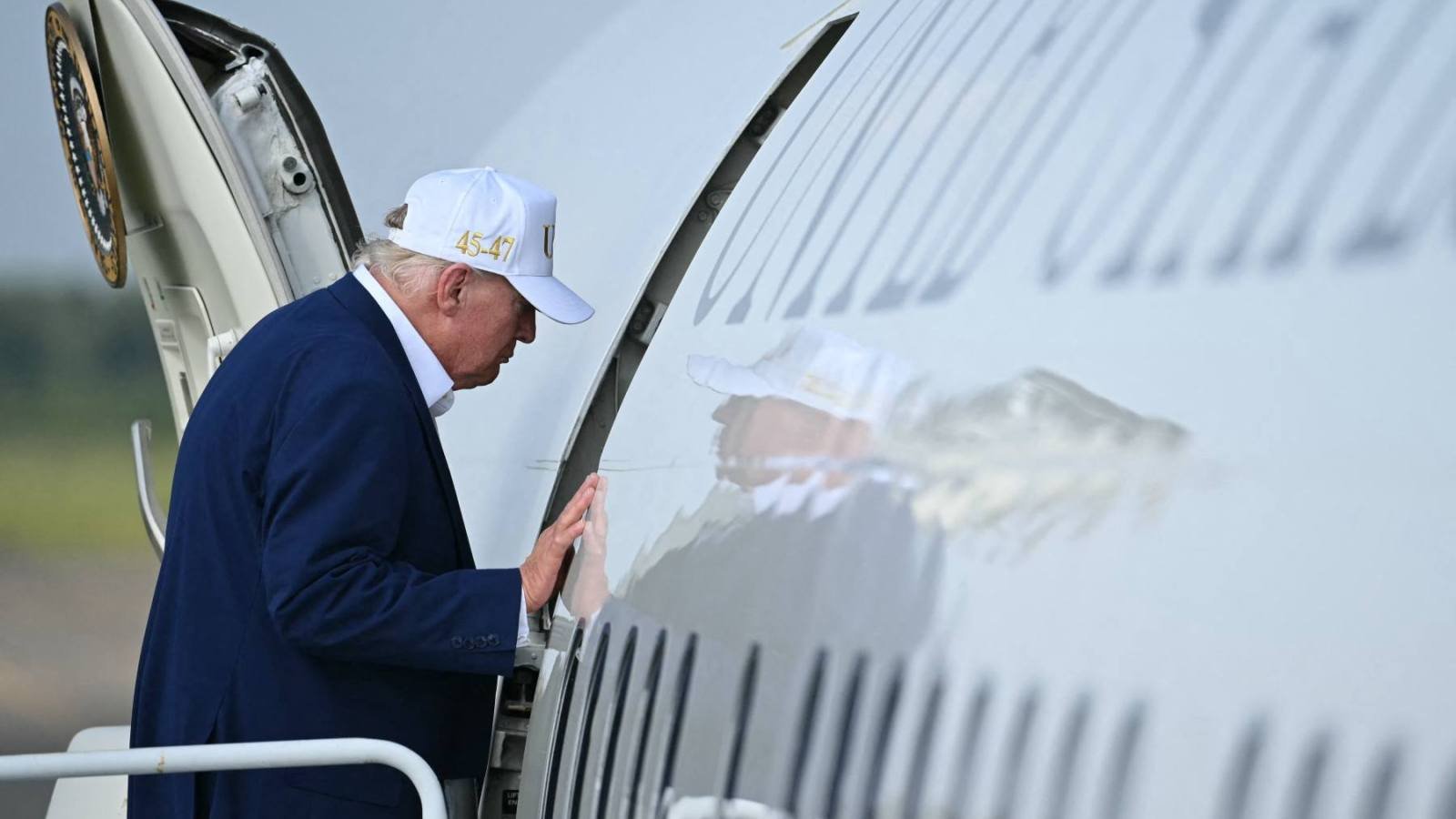
A startling report from The Washington Post has unveiled an extraordinary moment in presidential security history, detailing how former President Donald Trump was reportedly concealed in an airport catering cart during a period of intense Iranian threats. This highly unusual maneuver, intended to safeguard the Commander-in-Chief, also involved the deployment of a “legacy Air Force One” as a strategic decoy, carrying journalists and White House staff. The revelation offers a rare glimpse into the extreme measures taken by U.S. security services during a peak of geopolitical tension, underscoring the gravity of the perceived danger and the elaborate protocols enacted to protect the nation's leader.
The Escalating Iranian Threat and Its Geopolitical Context
The backdrop to this unprecedented security measure was a severe escalation in U.S.-Iran relations, particularly in early 2020. Tensions reached a boiling point following the U.S. drone strike that killed Iranian General Qasem Soleimani, commander of the Quds Force, on January 3, 2020. Soleimani's assassination was met with fierce vows of retaliation from Tehran, raising fears of a broader conflict in the Middle East. Iran swiftly launched more than a dozen ballistic missiles at two Iraqi military bases housing U.S. troops on January 8, 2020, including al-Asad Airbase. This period was characterized by high uncertainty and a credible fear of further, direct attacks on American assets or personnel, including the President, prompting maximum Secret Service alert.
An Unprecedented Security Maneuver: The Catering Cart Incident
Amidst this volatile environment, the specifics of President Trump's travel plans became a paramount security concern. According to The Washington Post's extensive reporting, the incident occurred as the President was preparing to depart from an undisclosed location, likely deemed vulnerable to potential Iranian intelligence gathering or direct attack. Faced with intelligence suggesting a credible and imminent threat, the Secret Service, in coordination with other security agencies, devised an extraordinary plan. Rather than proceeding with standard, high-visibility movements, President Trump was reportedly ushered into an ordinary airport catering cart. This unconventional concealment aimed to render him virtually invisible to hostile surveillance or operatives, allowing discreet movement across the tarmac to his waiting aircraft. The sheer audacity and ingenuity of the plan highlight the extreme lengths security personnel were prepared to go to ensure the Commander-in-Chief's safety during a time of heightened national security risk.
The Strategic Use of a "Legacy Air Force One" as a Decoy
Complementing the catering cart maneuver was the strategic deployment of a "legacy Air Force One." This term refers to an older model of the presidential aircraft, often a Boeing VC-25A, which, while capable of serving as Air Force One, was not the primary aircraft typically used for the President's principal travel at that time. The decision to utilize this particular plane as a decoy was a calculated gamble, designed to mislead any potential adversaries regarding the President's actual location and travel arrangements. Aboard this decoy aircraft were members of the press corps and some White House staff, who, by their presence, inadvertently reinforced the illusion that this was the President's actual flight. Their boarding of the "decoy" served a critical purpose: to draw attention and intelligence resources away from the true movements of the President, creating a diversion that bought crucial time and minimized risk for the genuine presidential conveyance. This tactic exemplifies a multi-layered approach to presidential protection, where deception can be as vital as direct defense.
Presidential Security Protocols and Their Adaptability
The U.S. Secret Service, responsible for protecting the President and other high-ranking officials, operates under incredibly stringent and constantly evolving protocols. Their threat assessments are based on a vast network of intelligence, drawing from agencies like the CIA, NSA, and FBI. While standard operating procedures typically involve extensive advance work, motorcade routes, secure air travel, and multiple layers of physical security, the reported catering cart incident suggests a situation where conventional protocols were deemed insufficient, requiring an improvisation that was both unorthodox and highly effective in its immediate objective. This episode throws into sharp relief the dynamic nature of presidential security, demonstrating that while meticulous planning is essential, the agency must also possess the agility and creativity to adapt to unpredictable, high-stakes threats by deviating from routine when necessary.
Implications for Future Presidential Travel and Threat Assessment
The incident carries significant implications for understanding presidential travel and threat assessment in the modern era. In a world of ubiquitous surveillance and increasingly sophisticated intelligence gathering by state and non-state actors, the ability to maintain operational secrecy is paramount. The use of a decoy plane and an unconventional method of transport for the President underscores a recognition within security circles that traditional methods of VIP protection may no longer be entirely sufficient against determined adversaries. Furthermore, this revelation highlights the inherent vulnerability even the most protected individual on Earth faces during periods of international crisis. For future administrations, this reported event will undoubtedly serve as a case study in extreme threat mitigation, reinforcing the need for flexible, imaginative, and robust security frameworks that can respond to any conceivable scenario, no matter how unusual.
The Washington Post's Revelation and Public Discourse
The details of this extraordinary security measure came to light through meticulous investigative journalism by The Washington Post, a publication renowned for its deep dives into governmental operations and national security matters. The report, drawing on multiple unnamed sources within the administration and security apparatus, painted a vivid picture of the tense moments and the extraordinary decisions made behind the scenes. Its publication ignited considerable public discussion, raising questions about the true extent of the Iranian threat, the transparency of presidential movements, and the appropriateness of such extreme measures. While the former administration did not officially confirm the specifics of the catering cart incident, the details were widely discussed in national security circles and across media platforms, underscoring the critical role of a free press in uncovering information vital to public understanding, even on sensitive aspects of presidential protection.
The account of President Trump's reported concealment in a catering cart and the deployment of a decoy Air Force One serves as a stark reminder of the ever-present dangers faced by world leaders and the extraordinary lengths security agencies go to mitigate them. This incident, born from a moment of intense geopolitical friction, underscores the critical importance of robust and adaptable presidential protection in an unpredictable world. Understanding these intricate layers of security is crucial for appreciating the complexities of national defense and the high stakes involved in safeguarding the Commander-in-Chief. For more in-depth analyses of national security, foreign policy, and the inner workings of presidential administrations, continue exploring the comprehensive coverage and expert insights available right here on NAME OF SITE.
Fonte: https://www.rollingstone.com